


TeamWork
All the achievements humans have reached is done with Teamwork. From discoveries to inventions, you name it somewhere there was a team involved. We know that most of the time problem solving is easier when we are with a team. Beside the Teamwork that we need we have a particular satisfaction when there are more people in the room than just ourselves. If this is an intrinsic cause yes or no people need the social behavior to survive on this planet. At the end of the line Teamwork is the way to go. People cooperate with each other by helping each other succeed. We are social beings and need this for our survival.


There are plenty of animals who do a similar thing. I remember looking up information about Ostriches and believe it or not they have a very smart way of surviving where they live. Within an Ostrich group there is a dominant pair. This pair makes a big nest and will stay on the eggs. The other females add their eggs into this big nest. When the chicks come out there are many of them to take care of but it goes a step further, the dominant male and female abduct chicks from other groups walking on the savanna. Those groups can be over 200 Ostriches. The reason? Nobody really knows but thinking about what it could be… the dominant pair wants their blood to survive so using other chicks from other pairs makes the survival rate of their own chicks higher. It’s a smart way of doing it. Many animals have their survival techniques ready to go, if this is the case with these birds more observation is needed. But there is more.


This makes me wonder how animals understand these types of situations and how they come up with their solutions? A type of communication and cooparation has to be in place with animals working together in such a way. Within the research centers and Zoological communities there has been plenty of research done with cooperation between individuals to reach a particular goal.
[kad_youtube url=”https://www.youtube.com/watch?v=CXcRw6Piaj8″ width=1000 height=600 ]
At Kolmården Zoo they testing if gibbons understand to cooperate with each other. We want them to pull a rope on both ends what they are not able to reach on their own. Attached to that rope will be a device where a reinforcer is present. Only by working together they are able to get this platform with reinforcement coming closer. First we teach them to pull a rope on their own. By pulling a rope attached to a platform on another piece of wood the platform shuffles to them with reinforcement present on it. After that we start to use 2 ropes for 1 animal, now the animal has to figure out pulling 2 ropes at the same time. If they pull 1 rope it won’t work so they need to pull both. It’s a great way for us to understand the abilities of the animals we work with. Especially animals we do not know so much about.

We have many animals in our Zoo who have strong social bonds. One of them are the Dholes. A dhole is an Asian wild dog. For them we are building Enrichment Devices where they have to cooperate together to be able to reach the goal. One of the ideas is having a chuck of meat on a bungee cord what they can’t reach. Attached to the bungee cord is another rope that they are able to reach. This means one animal has to pull the meat down while another one can eat. Just another way of making them cooperate with each other.


Maybe we should start looking more in observing the pleasant behaviours or the positive state behaviours instead of the ones we think are negative. When we know the behavioural diversity of the social if not all animals we work with we can measure what would be needed for their survival. Cooperation is part of the training and enrichment strategies of todays modern Zoo’s.
Animals are capable of doing a lot more then we think!
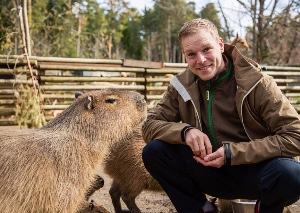

Peter Giljam
Thinking Outside the Zoo

